
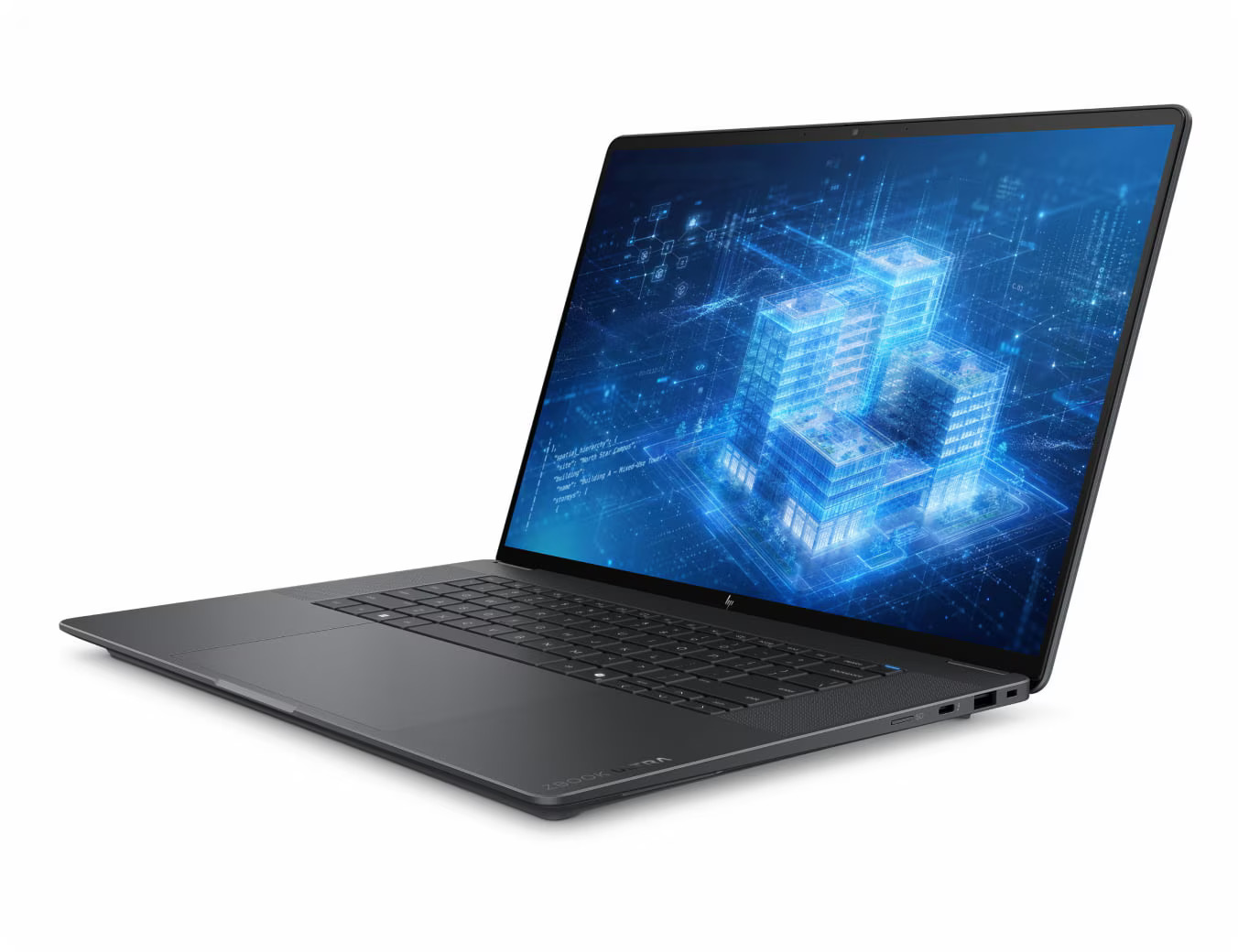
Most AI laptops still treat artificial intelligence as a collection of side features: summarize a document, generate an image, blur a webcam background. HP’s new ZBook Ultra G3a is trying something more ambitious by making AI agents part of the workstation itself.
The 16-inch mobile workstation is powered by AMD Ryzen AI Max+ PRO hardware and can be configured with up to 192GB of unified memory, with as much as 160GB allocated to graphics workloads. HP says that is enough to run large language models with up to 300 billion parameters locally, depending on the model and configuration.
The more interesting part, however, is the software. Perplexity Computer comes preloaded, and HP is demonstrating how it can connect directly to professional applications such as Autodesk Revit rather than forcing users to copy information between an AI chatbot and their work.
AI agents that can actually see the project
Through a supported MCP connector, Perplexity Computer can work with information from an open Revit model to perform tasks such as reading building data, writing reports, exporting views and generating schedules. That is a very different use case from asking a general chatbot a question about architecture because the agent is operating with context from the actual project.
HP is also positioning local processing as a privacy and cost advantage. A company working with confidential building plans, engineering data or unreleased product designs may not want every prompt and file sent to a cloud service. Running more of the workload on the laptop keeps sensitive information closer to the user while potentially reducing recurring cloud AI costs.
Why 192GB of unified memory matters
Traditional laptop buying advice normally focuses on 16GB or 32GB of system RAM and a separate amount of GPU memory. Local AI changes that conversation because large models can require enormous amounts of memory just to load before they begin generating an answer.
AMD’s unified-memory approach allows the processor and graphics hardware to access a much larger common pool instead of being restricted to the fixed VRAM capacity of a conventional mobile GPU. That does not automatically make the ZBook faster than every discrete-GPU workstation, but it gives it an unusual advantage when a workload is limited by memory capacity rather than raw graphics performance.
The ZBook Ultra G3a is still a portable machine rather than a desktop replacement in disguise. HP lists the system at around 4.2 pounds and 17.9mm thick, while its cooling system is designed to sustain up to 100W of performance.
This is what an “AI PC” needs to become
The ZBook Ultra G3a matters because it shows a more convincing version of the AI PC story. Instead of adding another assistant button to Windows, HP is trying to connect an AI agent to the specialised software professionals already use.
For most consumers, a workstation with 192GB of memory will be excessive. But the underlying idea will likely move down the market: local agents that understand the application you are working in, can take multi-step actions and do more processing without sending everything to the cloud.
HP expects the ZBook Ultra G3a to become available in October 2026, with pricing to be announced closer to launch. Malaysia pricing and availability have not been confirmed at the time of writing.