
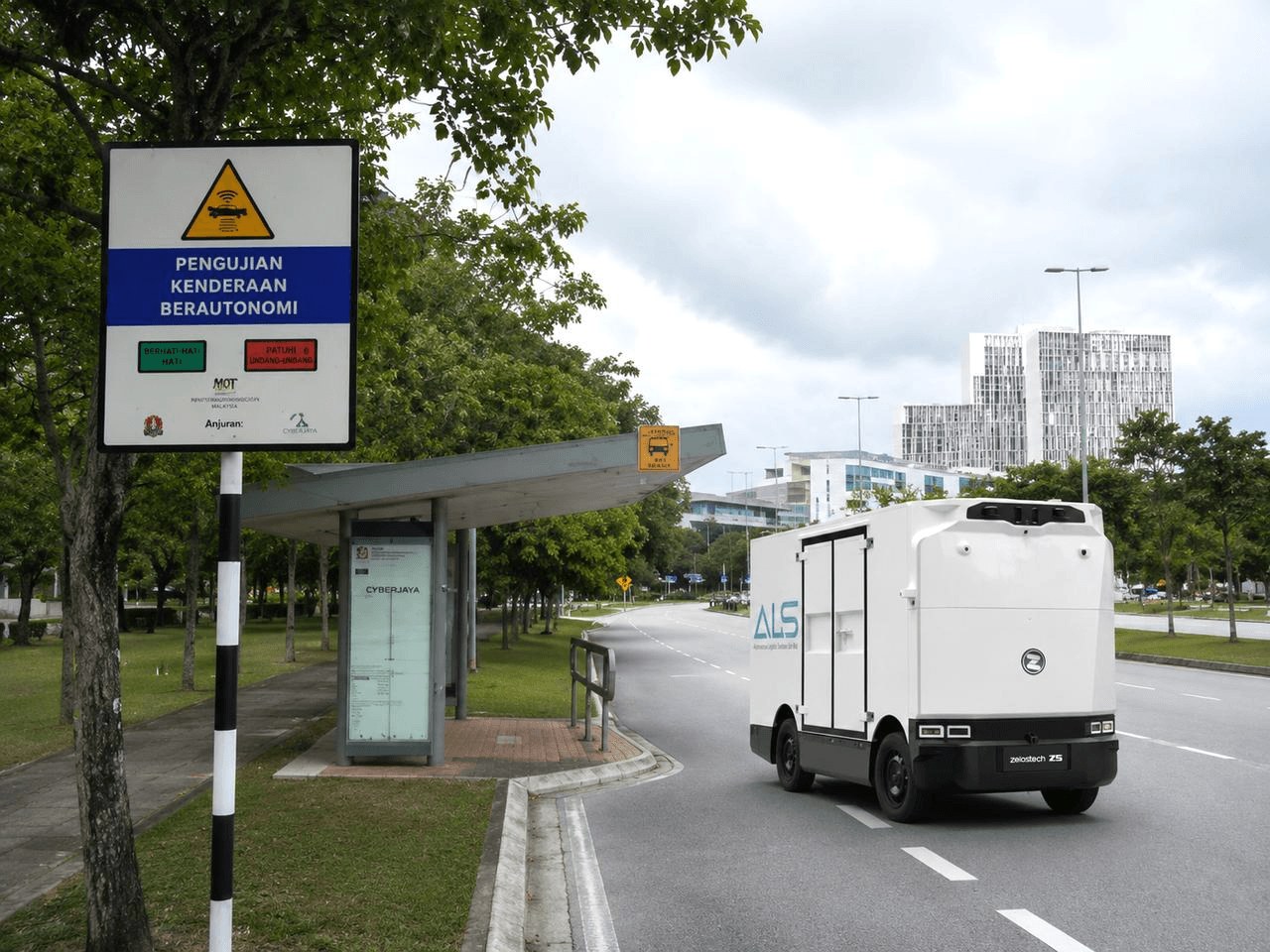
Malaysia has moved a Level 4 autonomous logistics vehicle from controlled demonstrations onto a public-road trial. Autonomous Logistic Solutions (ALS) has launched a six-month test of its driverless RoboVan along Cyberjaya’s 22km Malaysia Autonomous Vehicle (MyAV) route.
The vehicle carries a dedicated public-road trial licence plate and is operating under the Ministry of Transport’s autonomous-vehicle regulatory sandbox. Level 4 means it can perform the driving task without human input inside a defined operational area; it does not mean the vehicle can drive anywhere under every condition.
Why Cyberjaya is the important part
The MyAV route gives the project a mixture of real urban conditions rather than a closed test track. Zelostech, which supplies the RoboVan technology, says the route includes intersections, pedestrian crossings, commercial zones, business districts, educational institutions and MRT areas.
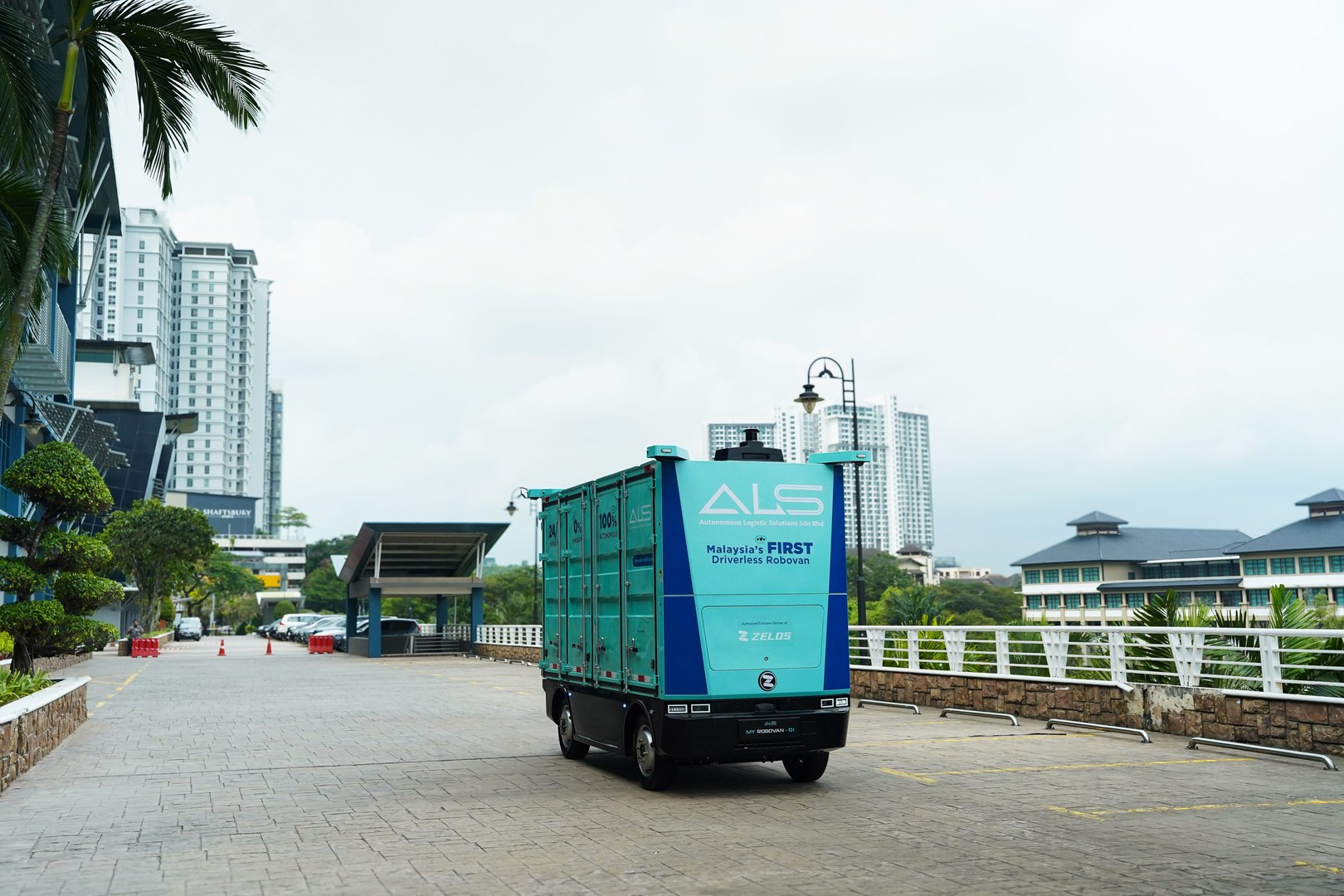
The trial is supported by a remote operations centre at CoPlace 9 in Cyberjaya, developed by ALS with SIDEC and Cyberview. Operators can monitor video feeds, telemetry, route status and diagnostics, and provide oversight when an exception falls outside the vehicle’s normal operating parameters.
ALS says the vehicle combines cameras, radar and LiDAR for 360-degree sensing and can detect obstacles more than 100 metres away. Those figures are manufacturer specifications; the six-month road programme is intended to generate the repeatable operational data needed to judge how the system behaves in Malaysian traffic.
From postal proof-of-concept to public roads
This is the next step after a proof-of-concept with Pos Malaysia at the National Mail Centre earlier in 2026. Moving onto public roads raises the bar: route completion, vehicle availability, intervention frequency and responses to unpredictable road users now matter as much as the vehicle’s ability to follow a mapped path.
The practical question is whether the RoboVan can fit into a real logistics workflow — including dispatch, loading, unloading and scheduling — without creating more supervision overhead than it removes. A successful trial would not automatically permit unrestricted commercial deployment, but it could give regulators and logistics operators stronger evidence for the next phase.
For Malaysian consumers, the immediate impact is limited because this is a logistics test rather than a passenger service. Its wider significance is that autonomous driving is beginning to be evaluated on local public roads with a defined route, licence framework and remote-safety infrastructure instead of remaining a trade-show demonstration.