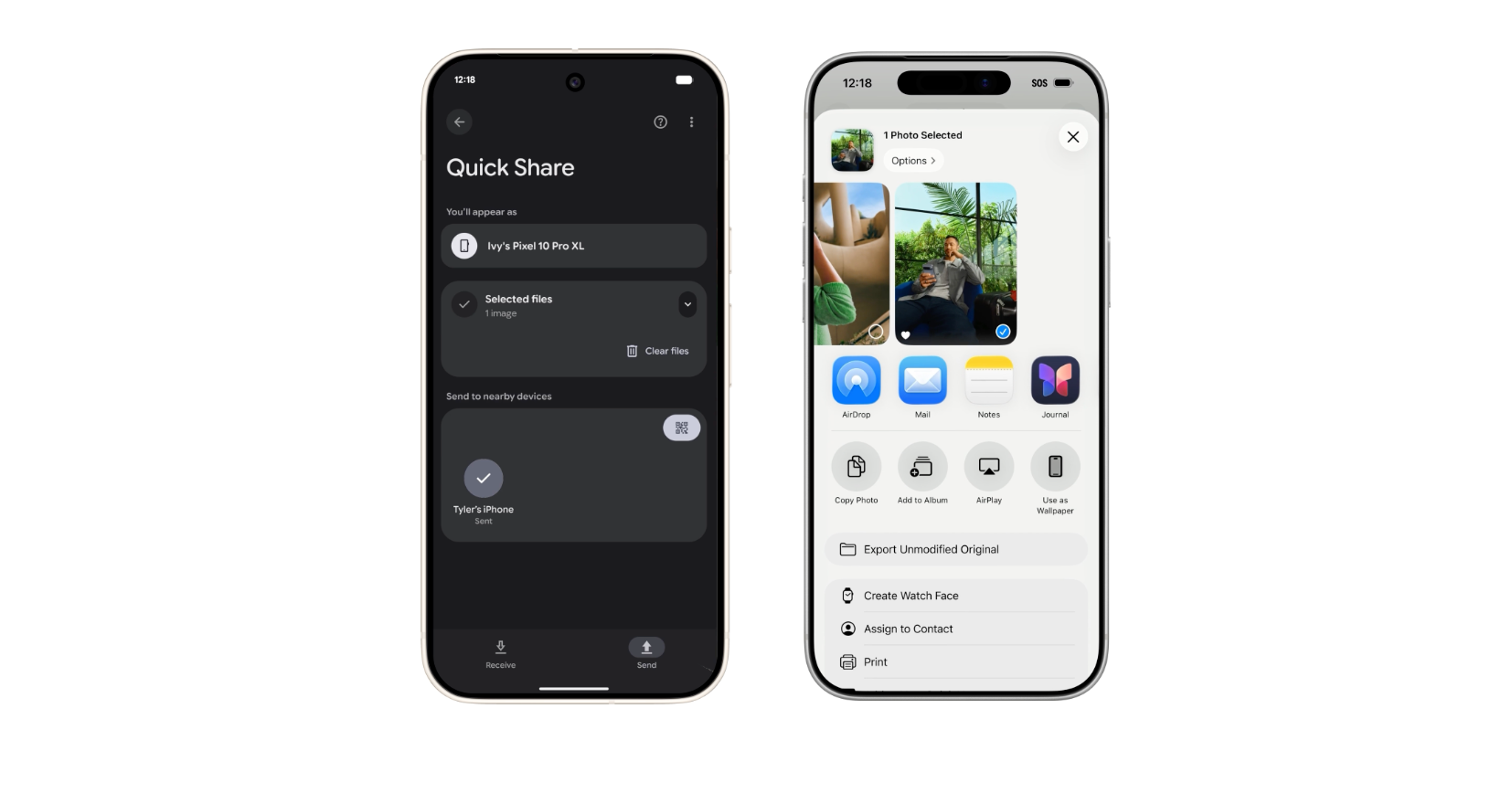
Google has confirmed that Android’s AirDrop-style sharing capability will be expanded to more devices in 2026. The move signals a major step toward reducing long-standing friction between Android and Apple ecosystems, allowing users to transfer photos, videos, and files between devices more naturally — without third-party apps or cloud workarounds.
In late 2025, the company introduced limited AirDrop interoperability on the Pixel 10 series, allow its to send files directly to nearby iPhones, iPads, and Macs using Apple’s native sharing protocol.
Now, Google has confirmed that this capability will no longer be confined to a small subset of devices. Speaking publicly, Eric Kay, Vice President of Engineering for Android, said the company will roll out AirDrop interoperability to a much wider range of Android phones throughout 2026.
Although Google has yet to provide a detailed list of supported models, the statement suggests that future Pixels and potentially devices from other manufacturers will gradually gain the feature through software updates.
For everyday users, this change could be more impactful than it sounds. Today, sharing files between Android and iPhone often requires messaging apps, cloud storage links, or email attachments — all of which add extra steps and compromise quality or convenience. With expanded Quick Share–AirDrop compatibility, users in mixed-device households, workplaces, or social settings could exchange files as seamlessly as they do within a single platform.
Google’s strategy also aligns with its broader effort to make Android more approachable for people moving from Apple devices. Rather than forcing users to abandon familiar workflows, the company is focusing on interoperability — letting Android integrate more naturally into multi-device environments that include iPhones, iPads, and Macs.
While an exact timeline has not been confirmed beyond “throughout 2026,” the announcement marks a meaningful shift in how Android and iOS will interact moving forward. If widely adopted, the expanded sharing experience could remove one of the most persistent pain points between the two ecosystems, making cross-platform connectivity simpler, faster, and more intuitive